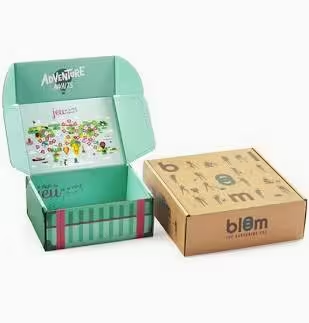
Finding the right way to package your tech items can feel tricky. You want them to look good. You also need them to arrive safely.
This is especially true when you’re looking for packaging design for tech hardware. It’s more than just a box. It’s the first thing your customer sees.
It tells a story about your brand. It shows you care about your product. And it can even help the planet.
Let’s dive into making that happen.
Finding great packaging design for tech hardware means balancing protection, presentation, and sustainability. It involves understanding materials, user experience, and your brand’s values. Good packaging makes a product stand out and assures customers of its quality.
The Heart of Tech Hardware Packaging
What makes packaging for tech special? It’s all about protecting delicate electronics. These items often have many small parts.
They can be sensitive to bumps and drops. They also need protection from things like moisture or static electricity. So, the primary job is safety.
But safety isn’t the only goal. Think about a new smartphone or a sleek laptop. The box it comes in is part of the excitement.
It’s the unboxing experience. This is where packaging design for tech hardware really shines. It can make customers feel happy and valued even before they turn the device on.
A well-designed package builds anticipation.
Companies spend a lot of time and money on this. They want the packaging to look modern and high-tech. Often, this means clean lines.
It means simple colors. Sometimes it involves special finishes. This visual appeal matches the product inside.
It tells customers they’ve bought something special. It reinforces the brand’s image of quality and innovation.
My Own “Oh No!” Packaging Moment
I remember getting a new set of wireless earbuds a few years back. They were from a brand I really liked. I was so excited to try them.
The outer box looked pretty nice. It had a cool matte finish and the logo was embossed. But when I opened it, the inside was a mess.
The earbuds were just rattling around in a thin plastic tray. There was no real padding. One of the charging contacts was bent.
It was frustrating! I had to send them back. That experience taught me how crucial good internal packaging is.
It’s not just about looks. It’s about actual protection. That’s when I started paying closer attention to packaging design for tech hardware.
Key Elements of Tech Packaging
Materials Matter: Think strong cardboard, custom foam inserts, and protective films. These keep the tech safe.
Structure is Key: How the box opens and closes. How items fit inside. It all affects safety and user experience.
Branding: Colors, logos, and fonts. They should match the tech product and company image.
Information: Clear labels for what’s inside and how to use it.
Understanding Your Tech Product’s Needs
Every tech product is different. A tiny USB drive needs different packaging than a large gaming monitor. What does your specific tech item need?
Let’s break it down.
For small items, like cables or adapters, you might use small boxes or blister packs. The packaging needs to stop them from getting lost or damaged in transit. It also needs to show off the product clearly.
For more complex gadgets, like smartwatches or drones, the packaging is more involved. You often see custom-fit inserts. These hold the device snugly.
They might be made of foam or molded pulp. This prevents any movement. It absorbs shocks.
It ensures that when the customer opens the box, the product looks perfect, not tossed around.
Think about screens. These are very fragile. They need robust protection.
This might involve foam corners, strong cardboard supports, or even air pillows. The goal is to create a secure cocoon. This protects against impacts.
It also shields against pressure.
What about accessories? Chargers, manuals, and extra parts also need a place. Good packaging design for tech hardware accounts for all these items.
They should be organized neatly. They shouldn’t scratch the main product. A user shouldn’t have to dig through a jumble of items.
Product Type & Packaging Needs
Small Electronics (USB drives, earbuds): Secure inserts, clear window boxes to see the product, tamper-evident seals.
Medium Gadgets (Smartwatches, tablets): Custom-molded trays, shock-absorbent materials, sleek outer boxes with premium finishes.
Large Electronics (Monitors, consoles): Sturdy corrugated boxes, thick foam padding, internal support structures, easy-to-open designs.
Accessories (Cables, chargers): Organized compartments, simple hang tabs or small boxes, bundled neatly.
The Unboxing Experience: More Than Just Opening a Box
In today’s world, unboxing is an event. People share it on social media. They post videos of themselves opening new tech.
This means the packaging has to deliver a wow factor. It’s a chance to build brand loyalty. It’s a marketing opportunity.
How can you make the unboxing special? It starts with the first touch. The material of the box itself.
Is it smooth? Textured? Does it feel sturdy?
A flimsy box can make a product feel cheap, no matter how good it is.
Then, how does it open? A magnetic closure can feel very premium. A simple, easy-to-tear strip is also effective if done well.
The sound it makes when opening can even play a role. The idea is to create a sense of delight and discovery.
Inside, the way the product is presented matters. Is it sitting perfectly in its spot? Are the accessories neatly tucked away?
Is there a thoughtful insert with a welcome message or quick start guide? These small touches make a big difference. They show attention to detail.
This attention to detail reflects on the product itself.
This is where packaging design for tech hardware becomes an art. It’s about creating a moment of joy. It’s about making the customer feel like they’ve invested in something truly worthwhile.
A memorable unboxing can lead to more sales. It can create positive word-of-mouth. It’s an investment in customer satisfaction.
Elements of a Great Unboxing
Anticipation: A box that feels substantial and looks intriguing.
Surprise: A smooth, satisfying opening mechanism.
Discovery: The product revealed beautifully, with all accessories neatly organized.
Delight: Small touches like welcome cards, quality printing, and thoughtful layout.
Sustainability in Tech Packaging: A Growing Trend
More and more people care about the environment. They want to buy from companies that do too. Tech companies are responding.
They are looking for ways to make their packaging greener.
What does sustainable packaging mean for tech? It means using recycled materials. It means using materials that can be easily recycled by the customer.
It also means reducing the amount of packaging used. Less material equals less waste.
Cardboard is a great choice. It’s widely recyclable. Companies are finding ways to use more recycled content in their cardboard.
They are also designing cardboard structures that are strong but use less material. This can involve clever folding techniques.
What about plastic? It’s often used for protective films or inner trays. Companies are looking for alternatives.
This could be biodegradable plastics or plant-based materials. Molded pulp, made from recycled paper, is another good option for inserts. It can be shaped to fit products perfectly.
Brands are also thinking about reducing inks and dyes. They might use soy-based inks. They might opt for simpler, single-color printing.
This makes recycling easier. It also reduces the environmental impact of manufacturing.
When you’re thinking about packaging design for tech hardware, ask yourself: “Can this be recycled easily?” “Is this material renewable?” “Can we use less of it?” Consumers are paying attention. Making sustainable choices can be a big selling point.
Sustainable Packaging Tips
Recycled Content: Use boxes and inserts made from post-consumer recycled materials.
Recyclability: Choose materials your customers can easily recycle in their local facilities.
Biodegradable Options: Explore plant-based or compostable materials for certain components.
Reduce & Reuse: Minimize the overall amount of packaging. Can a component serve multiple protective purposes?
Eco-Friendly Inks: Opt for water-based or soy-based inks.
Materials You’ll Encounter in Tech Packaging
Let’s look at some common materials used in tech hardware packaging. Knowing these can help you make informed decisions.
Corrugated Cardboard: This is the workhorse of packaging. It’s strong and comes in many thicknesses (called ‘flutes’). It’s great for outer boxes.
It provides excellent cushioning. It’s also widely recycled.
Paperboard/Cardstock: Thinner than corrugated cardboard. Often used for smaller boxes or internal dividers. It has a smooth surface.
This makes it good for printing graphics and branding.
Foam (EPS, EPE, Polyurethane): Expanded Polystyrene (EPS), Expanded Polyethylene (EPE), and Polyurethane foams are very common for inserts. They offer superior shock absorption. They can be molded into complex shapes.
However, some types of foam are not easily recycled. This is a growing concern.
Molded Pulp: Made from recycled paper or cardboard. It can be molded into custom shapes. It’s a more sustainable alternative to foam for many applications.
It’s also biodegradable and recyclable.
Plastic Films (PE, PET): Often used to protect screens or wrap components. Polyethylene (PE) and Polyethylene Terephthalate (PET) are common. While some plastics can be recycled, many are not easily processed.
Companies are looking for more sustainable film options.
Paper is a simple win for sustainability.
Choosing the right combination of these materials is key to successful packaging design for tech hardware. It balances protection, cost, appearance, and environmental impact.
Material Spotlight: Molded Pulp
What it is: A material made by mixing paper pulp with water and pressing it into molds.
Pros: Excellent cushioning, custom shapes possible, made from recycled content, biodegradable, recyclable.
Cons: Can be less rigid than foam, surface finish might not be as smooth.
Best for: Internal product cradles, inserts for electronics, protective barriers.
Designing for Different Tech Hardware Types
Let’s get more specific. How does the design change based on what you’re packaging?
Computers and Laptops: These are large and valuable. They need significant protection. Think thick cardboard boxes.
Inside, custom-fit foam or dense cardboard supports are essential. These cradle the laptop. They prevent any shifting.
The power adapter and cables are usually in their own separate, well-protected compartments. The unboxing often involves lifting the laptop out from its secure fit.
Smartphones: These are smaller but also high-value. The packaging is often more compact and premium. You’ll see sleek, rigid boxes.
Inside, a precisely cut insert holds the phone. It’s often elevated. This creates a sense of importance.
Accessories like chargers and cables are neatly tucked below or to the side. The user manual might be a slim card.
Tablets: Similar to smartphones but larger. The packaging needs to protect the screen. It often uses inserts that hold the tablet flat.
The focus is on a clean reveal. The accessories are usually organized in a separate section. Sometimes, the box itself is designed to be reusable for storage.
Audio Devices (Headphones, Speakers): This category varies. High-end headphones might come in rigid boxes with foam , as audio gear often has a strong aesthetic appeal.
Peripherals (Keyboards, Mice, Webcams): These are generally less fragile but still need protection. Simple, sturdy cardboard boxes with minimal internal padding are common. Sometimes, a plastic clamshell is used.
The design focuses on clear product visibility and easy opening. Cost-effectiveness is often a major factor.
The overarching theme is creating a safe haven. It must also feel appropriate for the product’s price point and brand image. This is the essence of effective packaging design for tech hardware.
Design Checklist by Product
Computers: Maximum shock absorption, secure cradling, compartmentalized accessories.
Smartphones: Premium feel, compact design, precise fit for phone and accessories.
Tablets: Screen protection, flat presentation, organized accessory bay.
Audio: Delicate part protection (earcups, cones), aesthetic appeal matching sound quality.
Peripherals: Durability, clear display, cost-efficiency.
The Role of Color, Graphics, and Typography
The visual elements of packaging are incredibly important. They communicate your brand. They can influence how a customer perceives the product’s quality and features.
Color: Tech brands often stick to a palette that suggests sophistication. Whites, blacks, grays, and silvers are common. These colors convey a sense of cleanliness and advanced technology.
Sometimes, a single bright accent color is used to draw attention or represent the brand’s unique identity. Think about Apple’s minimalist white boxes or Samsung’s use of blue accents.
Graphics: Keep it simple. Overly busy graphics can make tech products look cluttered or cheap. High-resolution product images are sometimes used, but often, brands prefer clean logos and subtle textures.
Embossing or debossing the logo can add a tactile premium feel without adding much visual noise.
Typography: The fonts you choose are critical. Sans-serif fonts are favored in the tech world. They are clean, modern, and easy to read.
Think of fonts like Helvetica, Futura, or even more stylized modern sans-serifs. The font should be legible at small sizes, especially for product information, safety warnings, or serial numbers.
Consider the overall tone. Do you want to appear innovative and cutting-edge? Or perhaps reliable and user-friendly?
Your visual choices should reflect this. They should align with the product’s marketing and the company’s brand guidelines. This careful use of visual elements is a key part of packaging design for tech hardware.
Logistics and Distribution Challenges
Packaging doesn’t just need to look good and protect the product. It also needs to survive the journey. Shipping tech hardware involves a complex supply chain.
The packaging must handle this.
Stacking Strength: Boxes are often stacked high in warehouses and on delivery trucks. The packaging must be strong enough to withstand this pressure without collapsing. This is where the ‘strength’ of the cardboard and the internal support structure really matters.
Impact Resistance: While protected internally, the outer box will encounter bumps and drops. It needs to resist punctures and tears. This is why many tech boxes use double-walled cardboard for larger items.
Environmental Factors: Depending on the shipping route, packaging might be exposed to varying temperatures or humidity. While most consumer electronics are not shipped to extreme conditions, some basic protection against moisture or rapid temperature changes is wise.
Tamper Evidence: For high-value electronics, it’s important that customers can tell if the package has been opened before it reaches them. Tamper-evident seals or specially designed box closures help ensure security and customer trust. This is an important consideration for packaging design for tech hardware.
Efficiency: Packaging also needs to be efficient to pack. If it takes too long to assemble or pack a product, it increases labor costs. The design should be practical for the assembly line.
When is Packaging “Good” vs. “Bad”?
We’ve talked a lot about what makes good packaging. But what are the signs of bad packaging?
Bad Packaging Signs:
- Product Damage: If the product arrives broken or scratched, the packaging failed.
- Excessive Waste: Too much material used for a small product.
- Difficult to Open: Frustrating packaging that requires scissors or tools and still won’t open easily.
- Poor Fit: Product rattling around inside, or parts crammed in awkwardly.
- Cheap Appearance: Flimsy materials or poorly printed graphics that make the product seem less valuable.
- Unclear Instructions: Missing important information or confusing labels.
- Environmental Concerns: Excessive use of non-recyclable plastics or difficult-to-dispose-of materials.
Good Packaging Signs:
- Product Arrives Pristine: The primary function of protection is met.
- Appropriate Material Usage: Just enough packaging to do the job, no more.
- Satisfying Unboxing: Easy to open, with a pleasant reveal.
- Secure and Organized: Every component has its place and stays put.
- Premium Look and Feel: Aligns with the product’s value and brand.
- Clear Information: Easy-to-understand labels and instructions.
- Sustainable Choices: Uses recycled, recyclable, or biodegradable materials where possible.
Understanding this difference is key to achieving successful packaging design for tech hardware.
Innovations in Tech Packaging
The world of packaging is always evolving. Here are some exciting trends and innovations that are shaping tech hardware packaging:
Smart Packaging: This is packaging that can interact with the customer or the product. Think QR codes that link to setup guides or product registration. Some packaging can even monitor temperature or humidity during transit.
This is still emerging for consumer tech but has huge potential.
Minimalist Design Trends: As mentioned before, clean and simple is in. Brands are stripping back unnecessary elements. They focus on high-quality materials and precise construction.
This often leads to a more elegant and modern look.
Personalization: While not common for mass-produced tech hardware, some premium brands are exploring ways to personalize packaging. This could be a small customizable element or a special edition box for loyal customers. This adds a unique touch.
3D Printing for Prototypes: While not for mass production, 3D printing is a fantastic tool for designers. It allows them to quickly create prototypes of complex inserts. This helps test fit and protection before committing to expensive tooling.
Advanced Material Science: New materials are constantly being developed. This includes stronger, lighter, and more sustainable options. Companies are actively researching ways to
These innovations show that packaging design for tech hardware is not static. It’s a dynamic field that adapts to technology, consumer demand, and environmental awareness.
When to Worry About Your Tech Packaging
Most of the time, packaging is just. packaging. But there are signs that might indicate a problem or a missed opportunity.
Frequent Damage Claims: If you’re noticing a lot of customers reporting damaged products, your packaging is likely insufficient. This could mean you need stronger materials, better internal support, or a more secure design.
Negative Customer Feedback: Pay attention to reviews or direct messages. If customers are complaining about the packaging – that it’s hard to open, wasteful, or looks cheap – it’s a clear signal for improvement.
Competitor Analysis: If your competitors have packaging that looks significantly more premium, protective, or sustainable, it might be time to re-evaluate your own approach. You don’t want to fall behind.
Sustainability Goals: If your company has made commitments to reduce environmental impact, and your current packaging doesn’t align with those goals, then it’s an area that needs attention. This includes looking at the lifecycle of the packaging materials.
Cost Overruns: Sometimes, packaging can seem cheap upfront but end up being expensive due to product damage, returns, or inefficient packing processes. Evaluating the total cost, not just the per-unit price, is important.
Considering these points can help you proactively address potential issues. It keeps your packaging design for tech hardware effective and competitive.
Quick Tips for Better Tech Packaging
Want to improve your tech hardware packaging? Here are some straightforward tips:
- Prioritize Protection: Always ensure your packaging can safeguard the product. Test it if possible.
- Embrace Simplicity: Clean, uncluttered designs often convey higher quality for tech.
- Focus on the Unboxing: Make it a positive, memorable experience for the customer.
- Go Sustainable Where Possible: Use recycled content and ensure recyclability.
- Get the Fit Right: Ensure everything has a snug, secure place inside. No rattling!
- Clear Labeling is Essential: Make sure product names, model numbers, and any warnings are easy to read.
- Test Your Packaging: If you can, simulate shipping conditions to see how it holds up.
- Gather Feedback: Ask customers what they think of your packaging.
Frequently Asked Questions About Tech Hardware Packaging
What is the most important aspect of tech hardware packaging?
The most important aspect is protecting the product during transit and storage. Delicate electronics need robust cushioning and structural integrity to prevent damage.
How can I make my tech packaging more sustainable?
You can make your packaging more sustainable by using recycled materials (like cardboard or molded pulp), reducing the amount of material used, opting for biodegradable components, and ensuring the packaging is easily recyclable by the end-user.
Is it worth investing in premium packaging for tech products?
Yes, investing in premium packaging can significantly enhance the customer’s perception of your product’s quality and your brand’s value. It also contributes to a positive unboxing experience, which can lead to greater customer satisfaction and loyalty.
What are some common mistakes in tech packaging design?
Common mistakes include using insufficient protective materials, making packaging too difficult to open, overusing plastic, having a cluttered design, and not considering the overall unboxing experience.
How does packaging differ for small vs. large tech items?
Small items might use blister packs or compact boxes with custom inserts. Large items like computers require much sturdier, larger boxes with substantial foam or cardboard supports to handle their size and weight and prevent damage from impacts.
Should I use a lot of graphics on my tech packaging?
Generally, less is more for tech packaging. Clean designs with minimal graphics, elegant typography, and subtle branding often convey a more sophisticated and modern image that aligns well with technology products.
Conclusion
Creating effective packaging design for tech hardware is a careful balance. It requires protecting your valuable products. It involves crafting a memorable experience for your customers.
And it increasingly means considering our planet. By focusing on the right materials, smart structural design, and appealing visuals, you can ensure your tech products arrive safely and make a great first impression. It’s an investment that pays off in customer satisfaction and brand reputation.

![best digital branding agencies in [state]](https://protechbranding.org/wp-content/uploads/2026/05/Best-Digital-Branding-Agencies-In-State.jpg)
![startup pitch deck design services [city]](https://protechbranding.org/wp-content/uploads/2026/05/Startup-Pitch-Deck-Design-Services-City.jpg)
![content marketing services [city]](https://protechbranding.org/wp-content/uploads/2026/05/Content-Marketing-Services-City.jpg)
![corporate rebranding agency [state]](https://protechbranding.org/wp-content/uploads/2026/05/Corporate-Rebranding-Agency-State.jpg)
![brand identity design agency [city]](https://protechbranding.org/wp-content/uploads/2026/05/Brand-Identity-Design-Agency-City.jpg)